





Educational Model
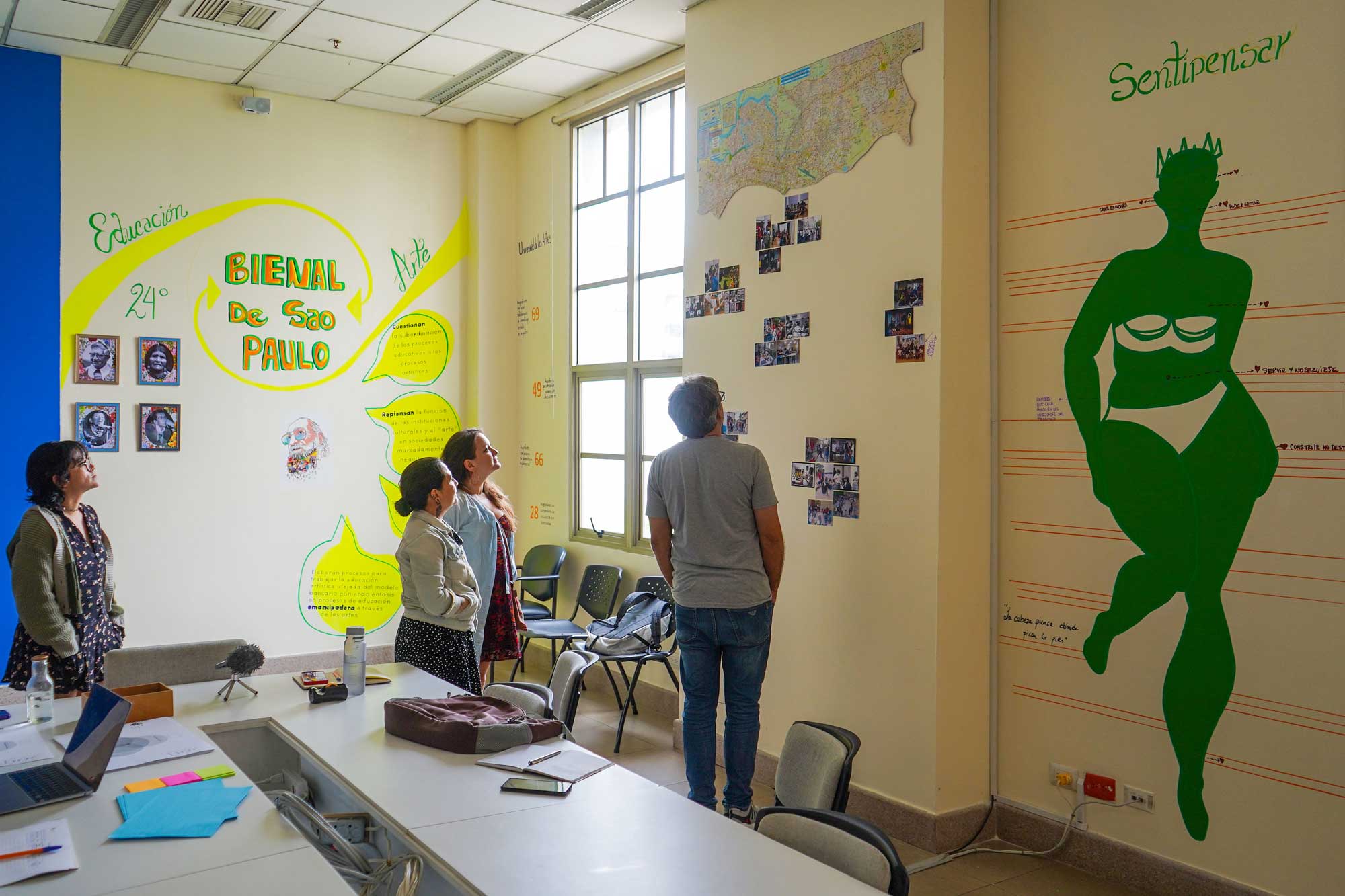
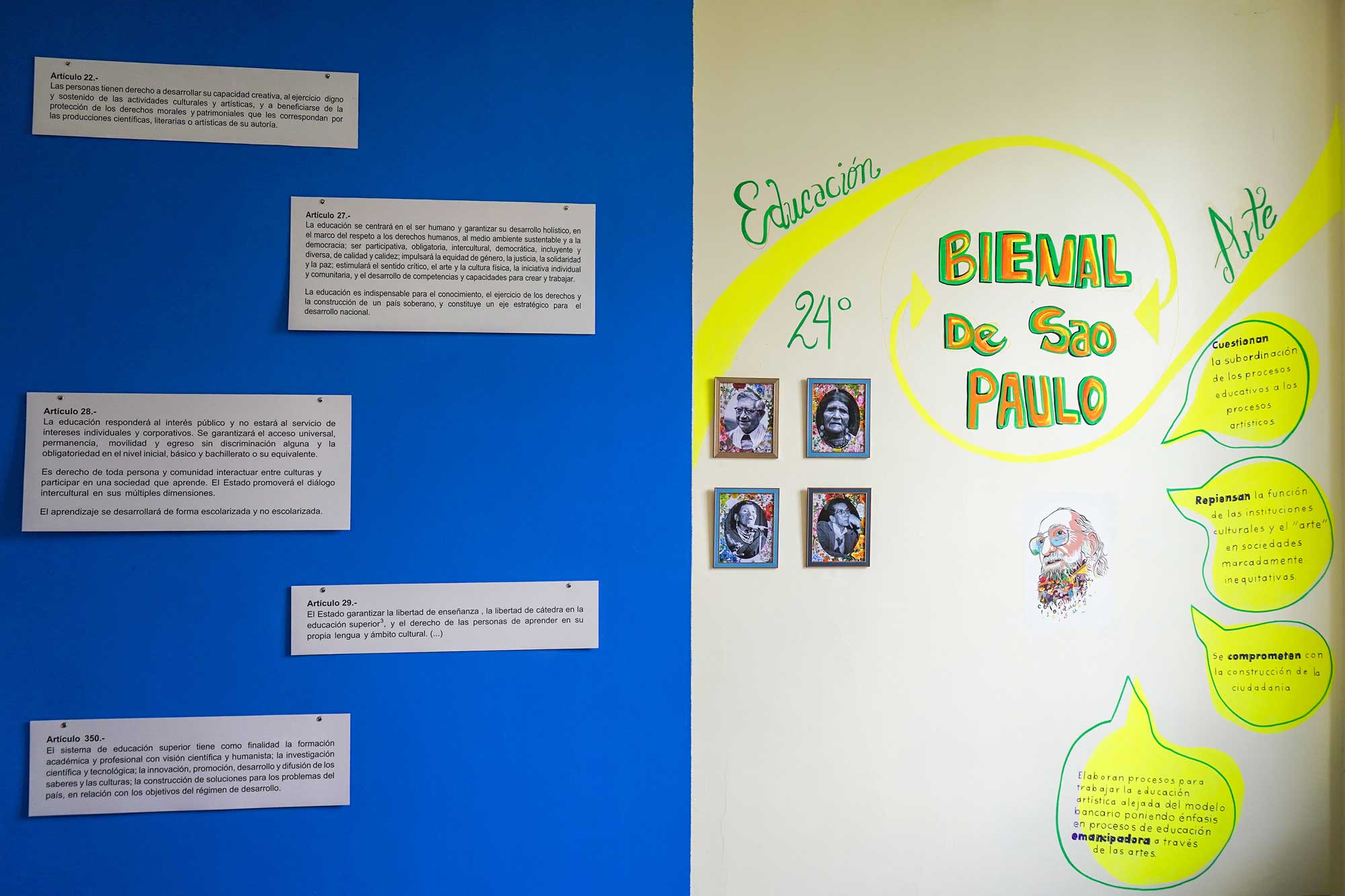
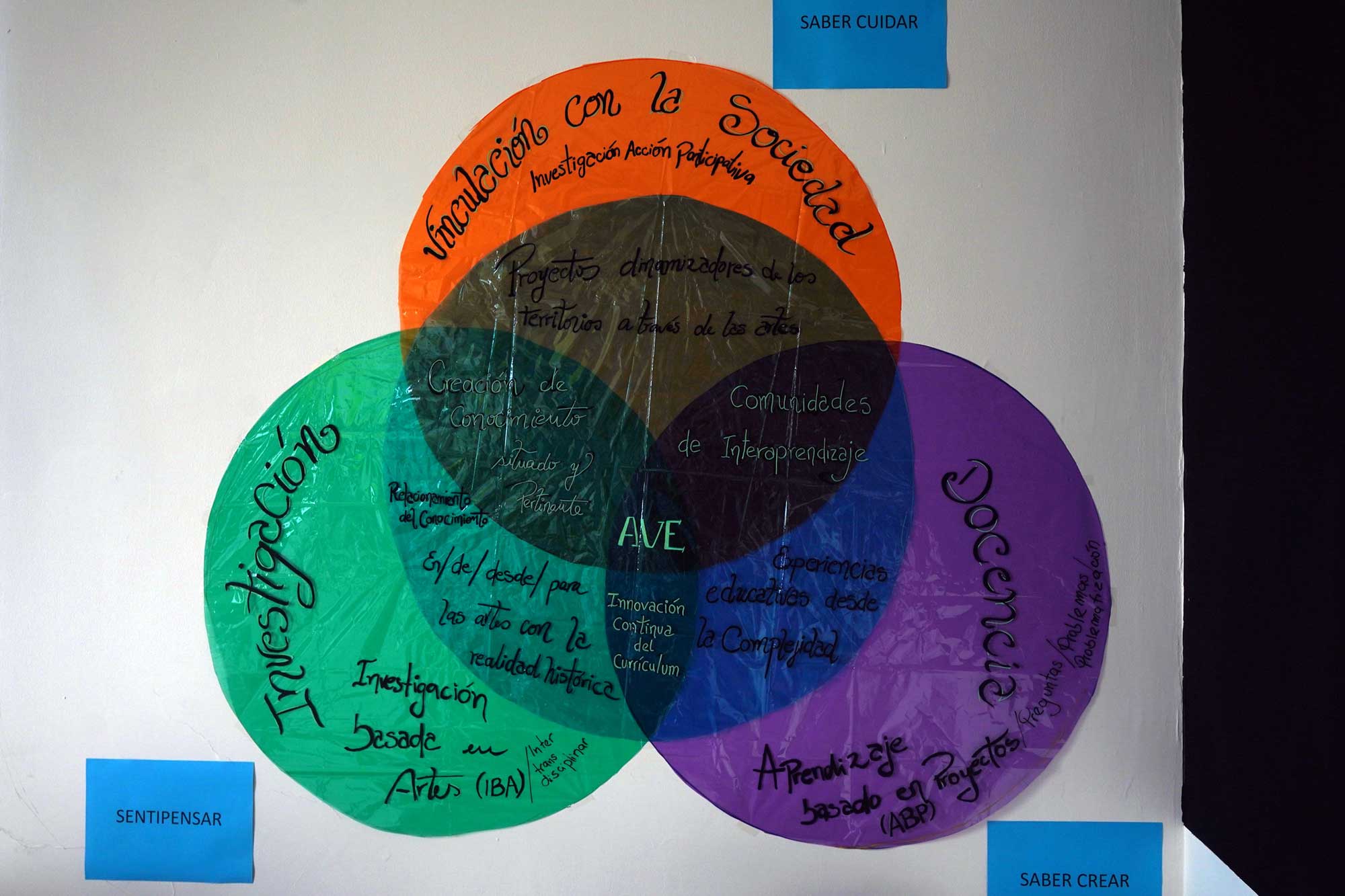
The educational model of the University of the Arts defines the philosophical horizons of our work, aligned with the institution's vision, mission, and ethical and governing principles. This model provides a clear framework that guides academic and creative activities, articulated in the three core functions of higher education: teaching, research, and engagement with society.
We start from the need to find a balance between artistic and educational practices, as well as to seek equitable relationships that recognize the diverse individual and collective potentials in generating and producing knowledge among the members of the University of the Arts community.
To achieve this, the model is based on three essential pillars: “sentipensar” (feeling-thinking), “saber cuidar” (knowing how to care), and “saber crear” (knowing how to create). These principles aim to educate artists of excellence, with ethical depth and sensitivity, capable of generating innovative and relevant artistic proposals that significantly contribute to the cultural development and social transformation of our country.

UA-OCS-RSE-2023-087 – Modelo Educativo y Pedagógico de la Universidad de las Artes 2.21 MB 5141 downloads
“Articulo Primero.- Aprobar el Modelo Educativo y Pedagógico de la Universidad…
Lineamientos para la implementación del Modelo Educativo y Pedagógico 1.05 MB 709 downloads
…Pedagogical Model
Our pedagogical approach focuses on offering concrete tools and active methodologies that translate the institution's theory and philosophy into university praxis to achieve meaningful and transformative learning.
We adopt experiential learningas our foundation, an approach that starts from concrete experience and utilizes various elements of knowledge to connect experiences and theories. Its goal is to promote epistemic and organic reflection based on the convergence of the three axes of the educational model.
In this way, we aim to generate from the individual and their environment—considering their individual and collective, social and intellectual characteristics—other perspectives and dynamics related to artistic creation, knowledge-generating practice-learning, and connections with different communities within the country.