

At the University of the Arts, diverse approaches to learning and inquiry bring together research on art and arts research.

UArtes academic offerings are technologically informed, diverse, relevant, and high quality. Its higher education model in the arts is recognized both nationally and internationally.

Programs of excellence in the field of the arts that contribute to the improvement and specialization of professionals.

Find here all the information so that, once you become a member of the university community, you can be aware of its benefits.

Through our transformative management model, the university contributes to the role of arts education with vitality and relevance for society.

Art research employs diverse methods of inquiry, exploration, and knowledge generation through its own unique approaches to investigation, work, and experimentation. This process leads to original results that contribute to artistic creation

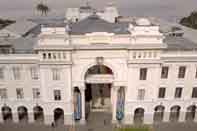
The University of the Arts is the first public institution of higher education in the arts at the national level. Learn in detail about its Transparency, Accountability, Planning and Strategic Management, and Human Resources Department.
Intercultural arts education is a foundational process in the holistic care of individuals and communities, addressing not only creative expression but also the protection of the mind, the territory, and the strengthening of public safety.
In this degree program, you will cultivate an artistic practice grounded in your own pedagogical approach. You will study performing arts, literary arts, sound arts, and visual and cinematic arts.
This degree program aims to train professionals capable of teaching art with creativity, critical thinking, and social commitment. Here you will learn to develop educational processes in schools, communities, and other settings, working in an ethical, intercultural, and collaborative manner across a wide range of contexts.
Graduates of the Intercultural Arts Education degree program will be prepared to teach art with creativity, social awareness, and respect for the country's cultural diversity. They will be equipped to interpret, apply, and assess the official Cultural and Artistic Education (ECA) curriculum at various levels. Graduates may work in schools, colleges, communities, and other educational settings, fostering artistic experiences in areas such as music, theater, dance, literature, and visual and cinematic arts, integrated with other fields of knowledge. The program prepares students to design pedagogical and cultural projects, collaborate with artists and diverse communities, and develop inclusive, intercultural, and participatory learning processes. Graduates will also be equipped to conduct research, drive innovation, and apply educational methodologies that strengthen identity, collective memory, care for the environment, and positive social transformation.
The program unfolds over eight semesters organized into two cycles: a foundational training cycle and a professional specialization cycle. Throughout the degree program, learning combines theory and practice through projects, research, and field experiences, linking art with education and social reality. Each semester integrates pedagogical, artistic, and research courses, with participatory classes and collaborative work. The program also promotes creative development, critical thinking, and the application of knowledge through real-world projects both inside and outside the classroom.

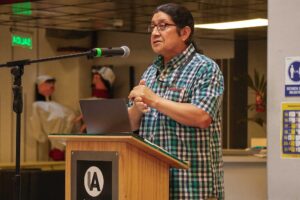
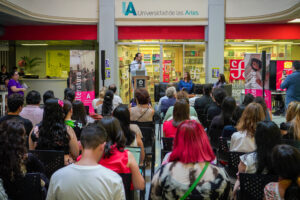
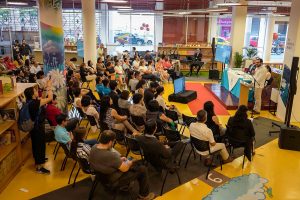
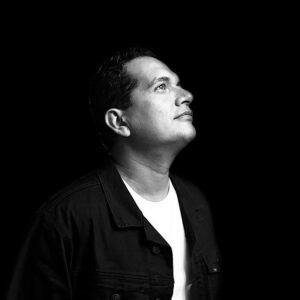
El doctor Armando Muyolema, investigador, lingüista, educador y crítico cultural kichwa de la provincia de Cañar, participó en Manglar: I Congreso Internacional de Educación Artística e Interculturalidad con la charla magistral sobre el pensamiento de Dolores Cacuango en torno a la temática principal de la cita. Dijo eran breves reflexiones, visualizando su historia, genealogía y centralidad del proceso de educación.

La cita de Manglar fue pensada como un espacio académico para construir instancias de intercambios de saberes, aprendizajes y experiencias a través de charlas magistrales, paneles y talleres. En su jornada inaugural, la mañana de hoy, el rector de la UArtes, doctor William Herrera, y la directora de la Escuela de Literatura, doctora María Alejandra Zambrano, coincidieron en la importancia de dialogar, cuestionar y reflexionar sobre la práctica pedagógica artística.

El rector William Herrera presentó el informe ante la comunidad universitaria y público en general. Acudió la vicealcaldesa de Guayaquil, Blanca López, a quien dijo: la UArtes está dispuesta a trabajar por la ciudad, la educación artística y la transformación social. Es necesario pensar en más espacios y programas en torno al cuidado de la vida y de cómo enfrentar la violencia mediante proyectos de vinculación, anotó.