





Educational Model
The educational model of the University of the Arts sets out the philosophical foundations that guide our work, in alignment with the institution’s vision, mission, and ethical principles. It provides a clear framework for academic and creative activities, organized around the three core functions of higher education: teaching, research, and community engagement.
The model begins with the need to strike a balance between artistic and educational practice while fostering equitable relationships that recognize the diverse individual and collective capacities involved in the creation and production of knowledge within the university community at UArtes.
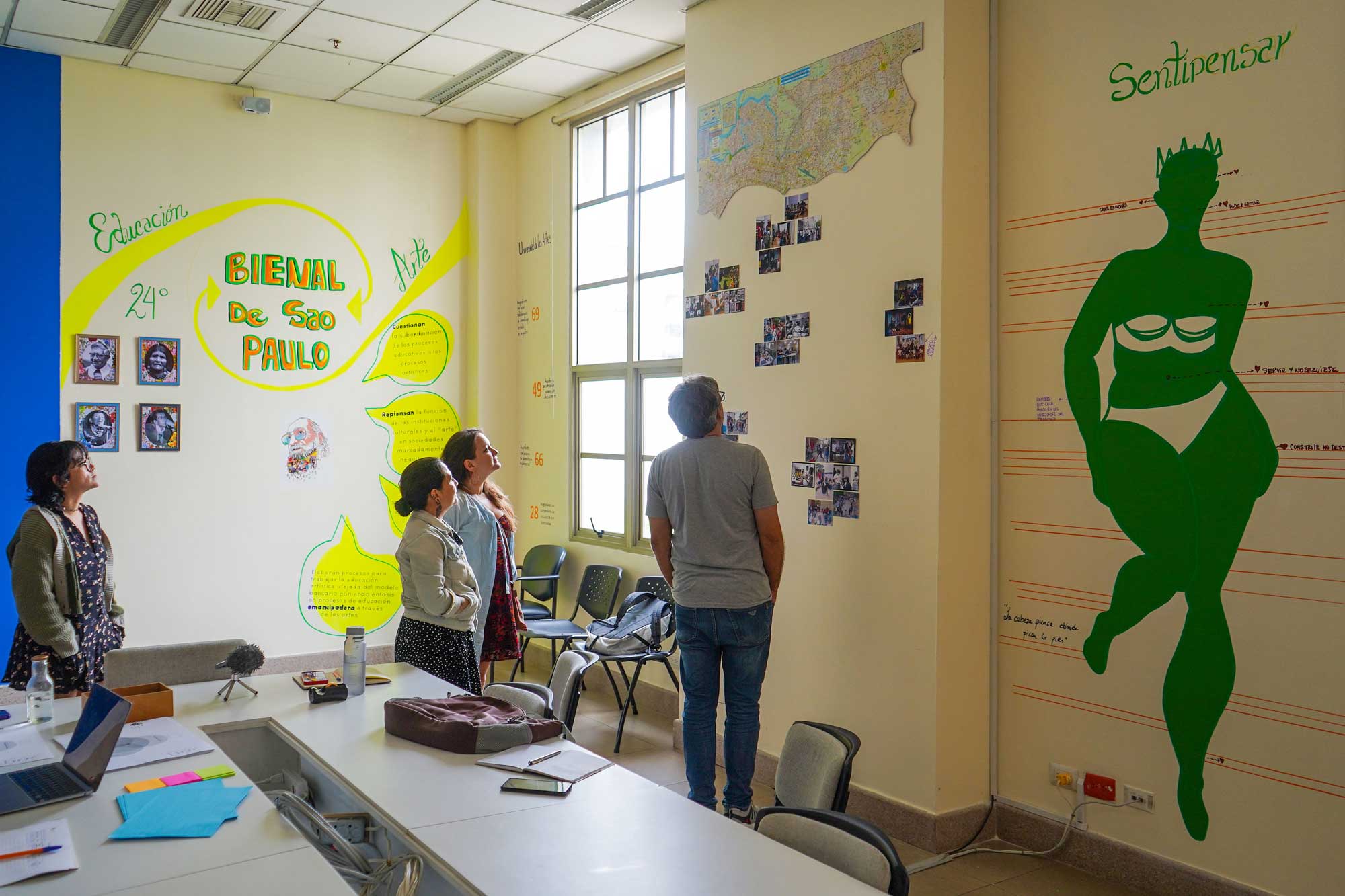
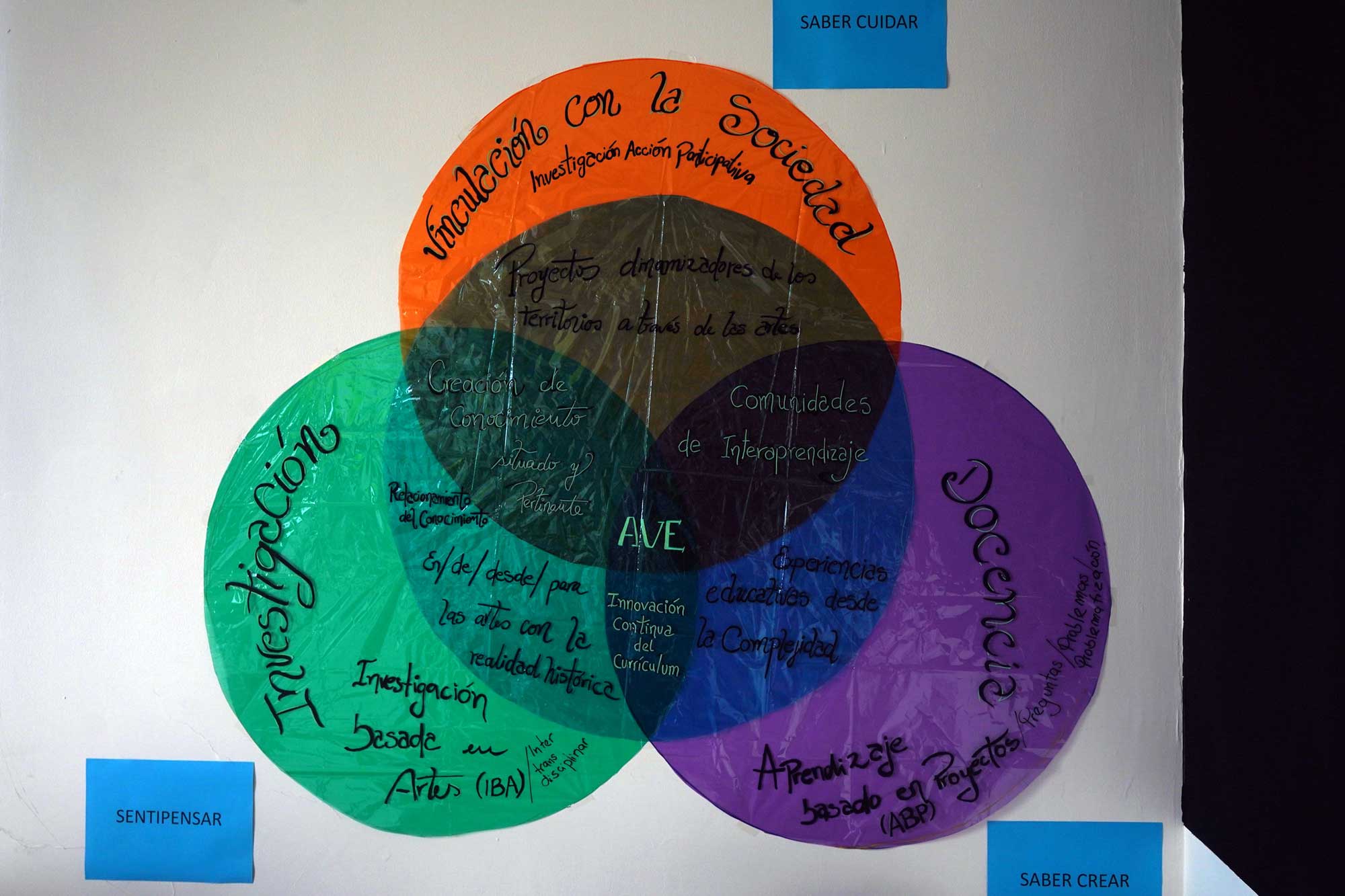
To achieve this, the model is built on three essential pillars: sentipensar (feeling-thinking), saber cuidar (the ethics of care), and saber crear (the art of creation). These principles seek to cultivate outstanding artists with strong ethical grounding and sensitivity, capable of developing innovative and relevant artistic proposals that contribute meaningfully to the cultural development and social transformation of our country.
UA-OCS-RSE-2023-087 – Educational and Pedagogical Model of the University of the Arts
Guidelines for the Implementation of the Educational and Pedagogical Model
Pedagogical Model
Our pedagogical approach provides concrete tools and active methodologies that translate the institution’s theoretical and philosophical principles into university practice, with the aim of fostering meaningful and transformative learning.
We adopt experiential learning as our foundational approach—a framework that begins with concrete experience and draws on multiple dimensions of knowledge to connect lived experience with theory. Its goal is to foster epistemic and organic reflection through the convergence of the three pillars of the educational model.
From this perspective, we seek to foster new perspectives and dynamics rooted in individuals and their territories, while taking into account their personal, collective, social, and intellectual characteristics. These perspectives inform artistic creation, practice-based learning as a process of knowledge production, and meaningful engagement with the diverse communities of our country.