Bachelor's Degree in Intercultural Arts Education

La educación artística intercultural en el contexto de la crisis contemporánea de la sociedad ecuatoriana emerge como un proceso fundamental en el cuidado integral de las personas y comunidades, abordando no solo la expresión creativa, sino también la protección de la mente, el territorio y el fortalecimiento de la seguridad ciudadana.

Objective:

To train professionals in arts education who articulate creativity, experimentation, reflection and knowledge in pedagogical creation; and, who sustain transformative processes of formal and non-formal teaching-learning in an ethical, intercultural and collaborative manner, in and beyond the classroom, in urban and rural areas.

Graduate Profile:

Graduates of the Intercultural Arts Education program at the Universidad de las Artes in Ecuador will be professionals with pedagogical competencies built from sensitivities to the diverse histories, knowledge and social realities of the country. They will be able to promote aesthetic experiences, creativity, and imaginative learning to interpret, apply and evaluate the official curriculum of Cultural and Artistic Education (ECA) at various levels and educational contexts. Interculturality will be fundamental in their training from an experiential learning model, preparing them to develop pedagogical and artistic practices rooted in diverse worldviews. They will be trained to contribute to artistic production, as well as to facilitate equitable teaching-learning processes in diverse environments. They will use methodologies consistent with critical and decolonial pedagogies, promoting dialogue of knowledge and anti-racist education. In addition, they will be able to intervene in formal and non-formal socio-educational contexts, with an intersectional approach from a planetary ethic, strengthening community ties and generating transdisciplinary educational-artistic projects. In short, they will have a leading role in the educational articulation from a transformative and respectful perspective of contemporary and ancestral cultural diversity.

Program of studies

The program of studies operates through two periods or stages of four semesters each. These periods respond to a spiral experiential and territorial pedagogy that is articulated to the Project and Problem Based Learning (PBL) and Creative Based Learning (CBL) method. In the first stage, theoretical and practical foundations corresponding to the basic formation of artistic education with an intercultural approach are provided through projects linked to society. In the second stage, knowledge is deepened and experiential learning processes are expanded through action-research in internships and graduation projects. Within each semester, practical and theoretical subjects on education, diversity and research in and through the arts are articulated. Additionally, students may choose a disciplinary path in the arts (performing, sound, film and visual arts).

Resources

Admissions

Ready to apply?

News

Armando Muyolema y la “Educación propia e interculturalidad desde el pensamiento de Dolores Cacuango”

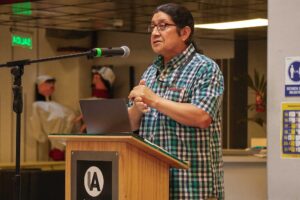
El doctor Armando Muyolema, investigador, lingüista, educador y crítico cultural kichwa de la provincia de Cañar, participó en Manglar: I Congreso Internacional de Educación Artística e Interculturalidad con la charla magistral sobre el pensamiento de Dolores Cacuango en torno a la temática principal de la cita. Dijo eran breves reflexiones, visualizando su historia, genealogía y centralidad del proceso de educación.

Leer más

En el I Congreso Internacional de Educación Artística e Interculturalidad

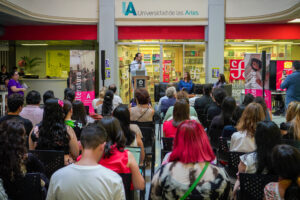
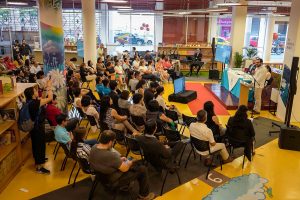
La cita de Manglar fue pensada como un espacio académico para construir instancias de intercambios de saberes, aprendizajes y experiencias a través de charlas magistrales, paneles y talleres. En su jornada inaugural, la mañana de hoy, el rector de la UArtes, doctor William Herrera, y la directora de la Escuela de Literatura, doctora María Alejandra Zambrano, coincidieron en la importancia de dialogar, cuestionar y reflexionar sobre la práctica pedagógica artística.

Leer más

En la rendición de cuentas, la UArtes ratifica su compromiso con procesos educativos y formación artística

El rector William Herrera presentó el informe ante la comunidad universitaria y público en general. Acudió la vicealcaldesa de Guayaquil, Blanca López, a quien dijo: la UArtes está dispuesta a trabajar por la ciudad, la educación artística y la transformación social. Es necesario pensar en más espacios y programas en torno al cuidado de la vida y de cómo enfrentar la violencia mediante proyectos de vinculación, anotó.

Leer más